

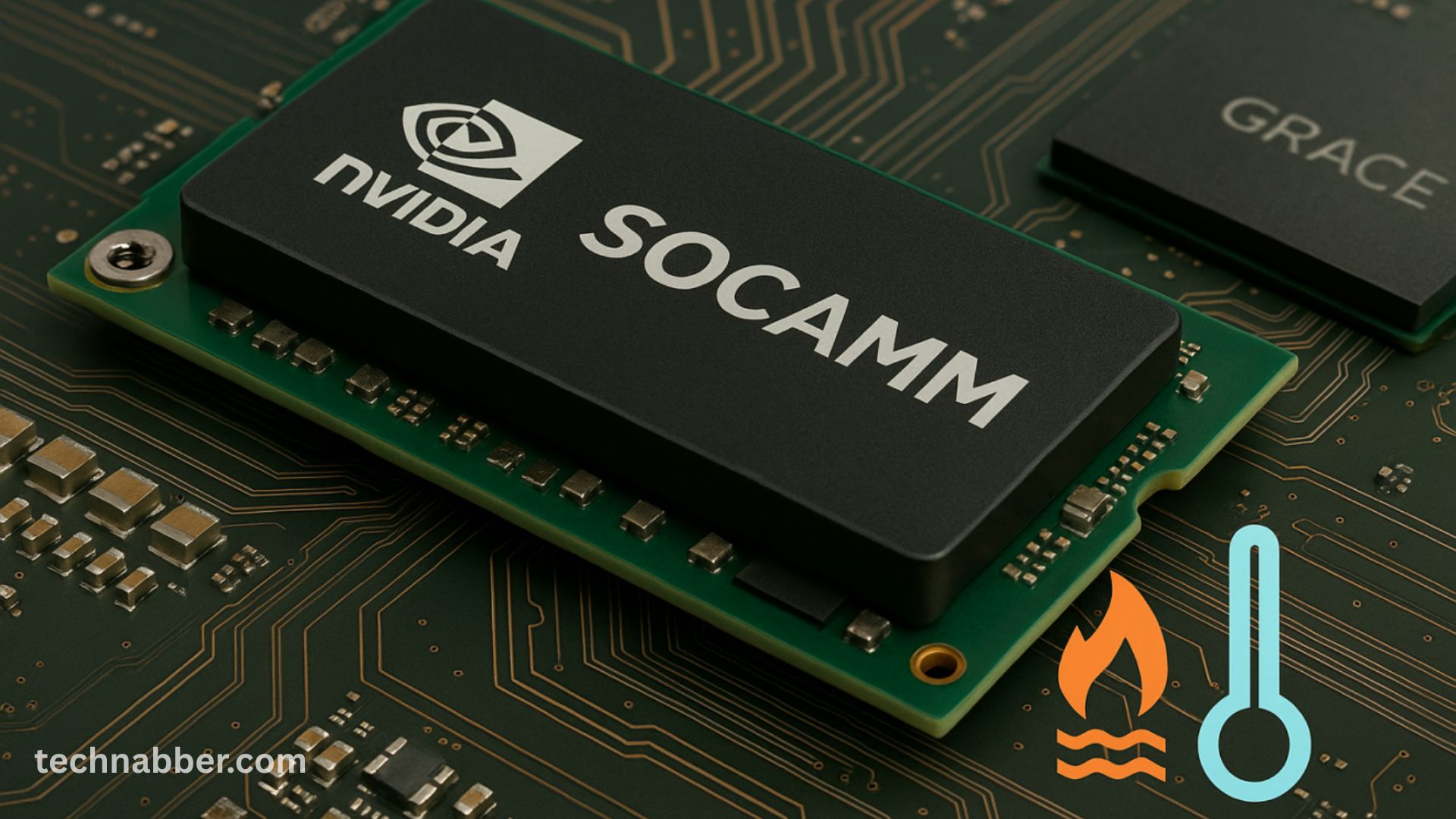
Nvidia’s artificial intelligence (AI) chips have become central to powering modern AI workloads, from generative AI models to high-performance computing applications. However, despite the hype surrounding these chips, their performance is still heavily dependent on memory solutions such as DRAM and high-bandwidth memory (HBM). Micron, a leading memory manufacturer, plays a crucial role in supplying this critical component. Recent market reactions have seen a significant sell-off in Micron stock, driven by investor concerns, but experts argue that this reaction may be overblown. The relationship between Nvidia chips and memory is complex, and overlooking Micron’s strategic importance could distort market perspectives.
Analysts emphasize that Nvidia’s AI chips cannot operate at full potential without sufficient, high-quality memory. As AI models grow in size and complexity, the demand for fast, reliable memory is accelerating. Micron’s technology enables Nvidia GPUs to handle massive datasets efficiently, facilitating both AI training and inference. The sell-off ignores this interdependency, and understanding the memory requirements of AI hardware is essential for investors and tech industry watchers alike.
The Role of Memory in AI Chips
AI chips, particularly Nvidia GPUs, rely heavily on high-speed memory to manage the enormous data throughput required for training deep learning models. Without adequate memory, AI chips cannot maintain peak performance, leading to bottlenecks that slow down computation. Memory solutions such as DRAM and HBM provide the bandwidth and low latency required for complex operations, including matrix multiplications, neural network training, and real-time inference.
Micron’s memory products are optimized for high-performance computing environments, ensuring that Nvidia GPUs can handle workloads from cloud servers, AI research labs, and autonomous technology platforms. The close partnership between GPU and memory manufacturers ensures that AI chips achieve maximum efficiency, making memory a critical factor in overall system performance.
Why the Micron Sell-Off May Be Overblown
Despite concerns over market volatility, analysts argue that the Micron sell-off fails to consider the long-term demand for memory in AI applications. Nvidia continues to dominate the AI hardware market, and its reliance on memory is only increasing as AI models grow more sophisticated. Micron, as a primary supplier of DRAM and HBM, stands to benefit from this trend.
Investors may have overreacted to short-term pricing fluctuations, ignoring the structural growth in memory demand driven by AI, data centers, and cloud computing. Historical data suggests that memory shortages or production constraints can temporarily affect stock prices, but long-term fundamentals remain strong due to sustained AI growth. Micron’s expansion initiatives and strategic partnerships position it to meet the surging memory requirements of Nvidia and other tech giants.
AI Model Growth and Memory Demand
Modern AI models, particularly large language models and generative AI systems, require enormous memory capacity to store intermediate computations and handle multi-dimensional data. As models scale, memory bandwidth becomes a limiting factor in training speed and inference efficiency. Nvidia GPUs, designed to accelerate AI workloads, are heavily dependent on high-quality DRAM and HBM to maintain optimal performance.
Micron’s innovations in memory technology, including faster DRAM chips and energy-efficient designs, allow AI systems to scale without significant performance degradation. Analysts argue that the market undervalues these contributions, resulting in an overreaction to Micron stock. Without sufficient memory, AI chips cannot meet the expectations of data-intensive applications, highlighting why the sell-off may be exaggerated.
Market Reactions and Investor Perspectives
The recent decline in Micron stock has been attributed to concerns about supply-demand imbalances, potential market saturation, and broader semiconductor volatility. However, tech analysts caution that these short-term market movements often overlook the structural growth in AI-related memory demand. Nvidia’s sustained leadership in GPUs and expanding AI ecosystem indicate that the memory market will continue to experience robust growth.
Investors may be underestimating the synergy between Nvidia GPUs and Micron memory products. As AI workloads expand into generative AI, autonomous vehicles, and advanced data analytics, the need for fast, reliable memory will continue to rise. Ignoring this relationship risks missing long-term growth opportunities in the semiconductor sector.
The Importance of DRAM and HBM
Dynamic random-access memory (DRAM) and high-bandwidth memory (HBM) are critical components for AI chips. DRAM provides large storage capacity for data in active use, while HBM offers high-speed, low-latency access essential for processing complex AI algorithms. Nvidia GPUs rely on these memory solutions to perform billions of calculations per second, ensuring efficient AI training and inference.
Micron’s continued investment in next-generation memory technologies strengthens its position as a key supplier to Nvidia. These memory solutions support increasingly complex AI models, enabling faster computation and energy-efficient performance. The market’s focus on short-term fluctuations may obscure the strategic importance of Micron in the AI hardware ecosystem.
Technological Interdependence Between Nvidia and Micron
The performance of Nvidia AI chips is intrinsically linked to the memory supplied by companies like Micron. Advanced AI workloads require GPUs with high memory bandwidth to minimize latency and maximize computational efficiency. Micron’s DRAM and HBM products are specifically engineered to complement Nvidia GPU architectures, facilitating smoother data flow and higher processing speeds.
This technological interdependence underscores why market reactions that decouple Nvidia’s success from Micron’s supply chain may be misguided. Analysts suggest that investors need to consider the symbiotic relationship between GPU design and memory technology when evaluating the semiconductor market.
Long-Term Growth Prospects
Despite recent sell-offs, the long-term outlook for Micron remains strong. AI-driven growth, cloud computing expansion, and data center investments are expected to drive continued demand for high-performance memory solutions. Nvidia’s GPU dominance further reinforces this trend, as their chips require consistent, high-quality memory to deliver peak performance.
Micron’s strategic initiatives, including production capacity expansion and technological innovation, position the company to capture ongoing AI-driven memory demand. Analysts highlight that memory shortages could constrain AI development, emphasizing the critical role of companies like Micron in sustaining technological growth.
Read More: Micron Expands Taiwan DRAM Operations to Meet Growing AI Demand
Competitive Landscape
Micron faces competition from companies like Samsung and SK Hynix, but its close collaboration with Nvidia provides a competitive advantage. By aligning memory design with GPU requirements, Micron ensures compatibility, performance optimization, and timely delivery for AI workloads. This alignment strengthens Micron’s market position, making it a pivotal player in the growing AI hardware ecosystem.
The competitive landscape also indicates that short-term stock fluctuations may not reflect fundamental growth potential. As AI applications expand globally, memory demand is expected to increase, benefiting well-positioned suppliers like Micron.
Risks and Challenges
Micron faces challenges such as potential supply chain disruptions, geopolitical tensions, and fluctuations in semiconductor pricing. However, these risks are balanced by long-term structural growth in AI-related memory demand. Investors should consider these fundamentals when evaluating stock performance rather than reacting to short-term volatility.
Ensuring consistent supply to Nvidia and other AI hardware providers is critical. Micron’s investment in production capacity, R&D, and technological innovation mitigates these risks while reinforcing its strategic role in the AI ecosystem.
FAQs (Frequently Asked Questions)
Why do Nvidia AI chips need Micron memory?
High-performance memory from Micron enables Nvidia GPUs to handle large AI datasets efficiently.
What types of memory do Nvidia GPUs use?
Nvidia AI chips rely on DRAM and high-bandwidth memory (HBM) for fast, low-latency performance.
Why did Micron stock sell off recently?
Investors reacted to short-term market volatility, ignoring long-term AI-driven memory demand.
How does memory affect AI chip performance?
Insufficient memory can create bottlenecks, slowing AI training and inference processes.
Is the Micron sell-off justified?
Analysts argue it is overblown because AI growth continues to drive strong memory demand.
How is Micron supporting Nvidia GPUs?
Micron provides optimized DRAM and HBM solutions to complement GPU architectures for AI workloads.
What are the long-term growth prospects for Micron?
Rising AI applications, cloud computing, and data center expansion will increase memory demand.
What risks does Micron face?
Challenges include supply chain issues, geopolitical tensions, and semiconductor pricing fluctuations.
Conclusion:
Nvidia AI chips rely heavily on Micron memory to achieve peak performance. The recent Micron sell-off overlooks this interdependence, exaggerating short-term concerns. Long-term demand for DRAM and HBM is set to grow with expanding AI applications, cloud computing, and high-performance workloads. Micron’s strategic role in enabling Nvidia GPUs ensures AI systems operate efficiently. Investors recognizing this synergy understand the company’s fundamental value. The sell-off may have gone too far, ignoring memory’s critical role in sustaining AI innovation.
