

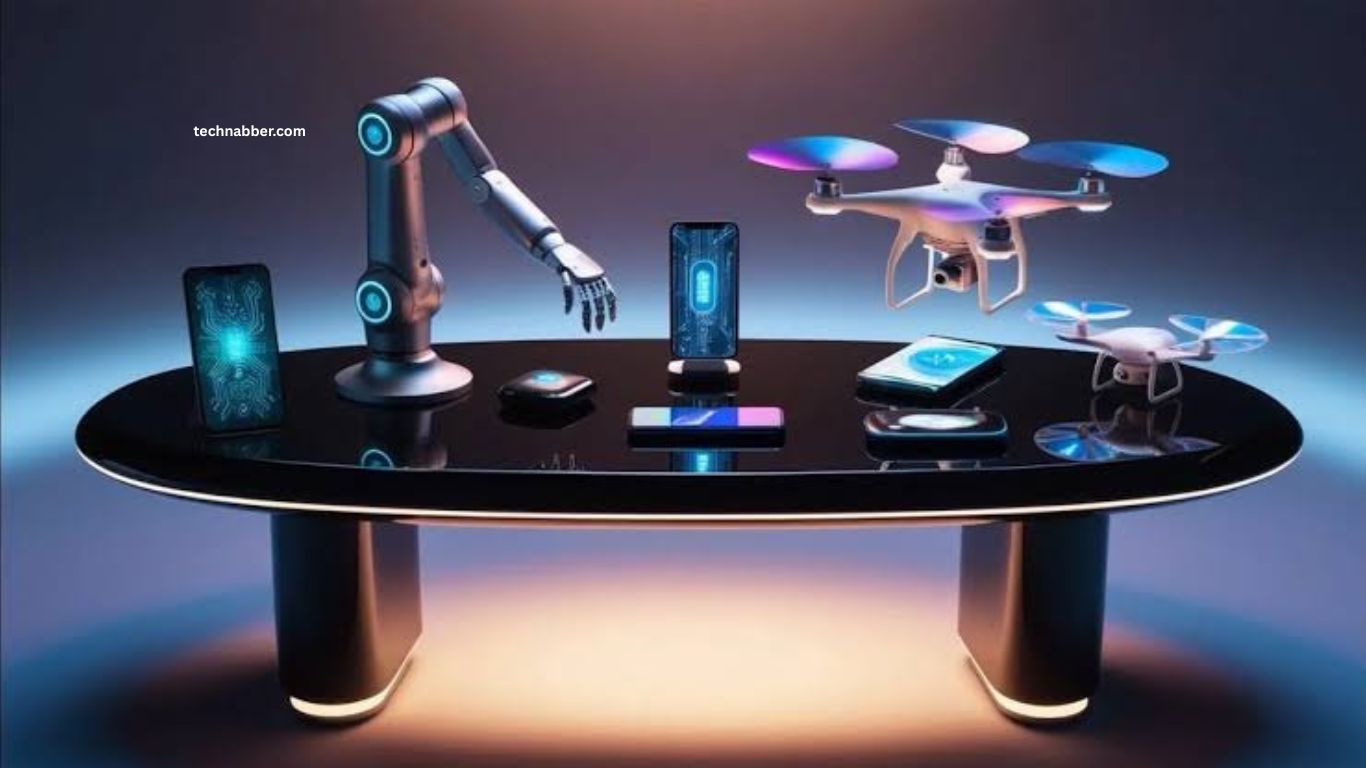
Technology continues to reshape everyday life through smarter devices, advanced software, powerful automation, and groundbreaking digital solutions. Modern innovations are creating new opportunities across healthcare, communication, transportation, entertainment, education, and business. Artificial intelligence, robotics, quantum computing, and connected technologies are moving from experimental concepts toward practical applications that can change how people live and work.
The most exciting innovations in modern tech focus on solving real-world problems while improving speed, convenience, productivity, and accessibility. From AI-powered assistants to autonomous machines, these technologies are building a more connected and intelligent digital future. Understanding these developments offers valuable insight into where technology is heading in 2026 and beyond.
Read More: Smart Technology Ideas That Improve Productivity
Artificial Intelligence Is Transforming Everyday Life
Artificial intelligence has become one of the most influential technologies in the modern digital landscape. AI systems can analyze information, recognize patterns, generate content, automate repetitive tasks, and support complex decision-making.
Generative AI has expanded rapidly across writing, image creation, video production, software development, customer service, and research. Businesses are using intelligent systems to improve productivity, while individuals can access AI tools for learning, creativity, planning, and everyday tasks.
AI-powered applications are also becoming more personalized. Modern systems can understand natural language, adapt responses based on context, and assist with multiple types of digital activities.
Robotics Is Becoming More Advanced
Robotics represents another major area of technological innovation. Modern robots are becoming more capable of understanding environments, processing information, and performing complicated physical tasks.
Industrial robots already support manufacturing, logistics, and warehouse operations. New generations of intelligent robots are expanding into healthcare, agriculture, hospitality, construction, and home automation.
Humanoid robotics is receiving particular attention because advanced machines could eventually assist with tasks designed for human environments. Improvements in computer vision, sensors, AI, and battery technology are helping robots become more flexible and useful.
Quantum Computing Opens New Possibilities
Quantum computing introduces a fundamentally different approach to processing information. Traditional computers use bits, while quantum computers use quantum bits, known as qubits, to handle certain types of calculations in ways that can offer major advantages.
Although large-scale practical quantum computing remains challenging, research continues across cryptography, materials science, drug discovery, optimization, and scientific simulation. Improvements in quantum hardware and error correction could eventually unlock capabilities beyond conventional computing systems.
Smart Devices Are Creating Connected Environments
The Internet of Things is making everyday objects increasingly intelligent. Smart appliances, wearable devices, security systems, vehicles, sensors, and industrial equipment can communicate through connected networks.
Smart homes are a clear example of this development. Users can control lighting, temperature, security, entertainment, and appliances through mobile applications or voice commands.
Connected technology is also improving cities and industries. Sensors can monitor traffic, energy consumption, environmental conditions, equipment performance, and infrastructure, helping organizations make faster and more informed decisions.
Wearable Technology Is Evolving
Wearable technology has moved beyond basic fitness tracking. Modern smartwatches and other wearable devices can monitor activity, provide notifications, support communication, and offer increasingly sophisticated personal insights.
Emerging wearable technologies are also exploring augmented reality, smart glasses, advanced sensors, and AI-powered assistance. These innovations could make digital information more accessible without requiring constant interaction with smartphones or computers.
Extended Reality Is Changing Digital Experiences
Virtual reality, augmented reality, and mixed reality are creating new ways to interact with digital content. These technologies combine immersive environments with real-world surroundings to deliver experiences that traditional screens cannot provide.
Extended reality has applications in gaming, education, healthcare, engineering, training, architecture, and entertainment. Students can explore virtual environments, professionals can practice complex procedures, and designers can visualize digital models in physical spaces.
As hardware becomes lighter and software becomes more advanced, immersive technology could become a larger part of everyday digital experiences.
Autonomous Vehicles Are Advancing
Autonomous driving technology is another exciting area of modern innovation. Vehicles increasingly use cameras, radar, sensors, mapping systems, and AI algorithms to understand roads and surrounding objects.
Advanced driver-assistance systems are already available in many vehicles, supporting functions such as lane assistance, adaptive cruise control, parking assistance, and collision detection.
Fully autonomous transportation remains a complex technological and regulatory challenge. Continued progress in sensors, computing power, mapping, and machine learning could gradually expand automated transportation applications.
Biotechnology Is Merging With Digital Technology
Technology innovation is also transforming biotechnology. AI-assisted research, advanced genetic technologies, digital diagnostics, and automated laboratory systems are helping scientists study biological systems more efficiently.
AI can analyze large datasets and identify patterns that may support drug discovery and scientific research. Advanced laboratory technologies can automate experiments and accelerate research processes.
The combination of computing, biology, and engineering could produce important breakthroughs in medicine, agriculture, environmental science, and materials development.
Sustainable Technology Is Gaining Momentum
Sustainability has become an important focus of technological development. Researchers and companies are creating innovations designed to improve energy efficiency, reduce waste, and support cleaner production.
Renewable energy systems, battery technology, smart electricity grids, electric transportation, energy-efficient computing, and advanced recycling methods are contributing to this shift.
Green technology can also help organizations monitor resource consumption and identify areas where energy and materials can be used more efficiently.
Edge Computing Is Improving Digital Performance
Edge computing brings data processing closer to the devices generating information. Instead of sending every piece of data to distant data centers, certain operations can happen locally or near the source.
This approach can reduce latency and improve responsiveness for applications requiring rapid decisions. Autonomous systems, smart factories, connected healthcare devices, gaming, and industrial monitoring can benefit from faster data processing.
The growth of edge computing is closely connected with the expansion of IoT devices and real-time AI applications.
Cybersecurity Is Becoming More Intelligent
As digital systems become more sophisticated, cybersecurity technology is evolving alongside them. AI-powered security tools can analyze network activity, identify unusual behavior, detect potential threats, and support faster responses.
Modern cybersecurity increasingly relies on continuous monitoring, automated threat detection, identity protection, encryption, and advanced authentication methods.
Protecting connected devices and digital infrastructure will remain essential as businesses and individuals become more dependent on technology.
The Future of Modern Technology
The future of technology will likely involve greater integration between artificial intelligence, robotics, connected devices, advanced computing, biotechnology, and immersive digital platforms. Individual innovations may become more powerful when combined.
AI could control intelligent devices, robots could use advanced vision systems, wearables could provide personalized digital assistance, and connected infrastructure could respond to changing conditions in real time.
These developments highlight an important shift in modern technology. Innovation is no longer focused only on creating faster devices. Increasingly, the goal is to build intelligent systems capable of understanding environments, assisting people, automating processes, and solving complex problems.
Frequently Asked Questions
What is the most exciting modern technology?
Artificial intelligence is one of the most exciting technologies because it is transforming work, creativity, communication, and everyday tasks.
How is AI changing daily life?
AI helps people automate tasks, create content, analyze information, use smart assistants, and receive personalized digital services.
What role does robotics play in modern technology?
Robotics improves manufacturing, healthcare, logistics, agriculture, and home automation through intelligent machines.
Why is quantum computing important?
Quantum computing could solve certain complex problems much faster than traditional computers, supporting scientific research and advanced technology.
How are smart devices improving everyday life?
Smart devices connect appliances, vehicles, wearables, and home systems, making daily activities more convenient and automated.
What is the future of modern technology?
The future will focus on AI, robotics, connected systems, sustainable technology, advanced computing, and immersive digital experiences.
Conclusion
The most exciting innovations in modern tech are transforming the relationship between people and digital systems. Artificial intelligence, robotics, quantum computing, smart devices, extended reality, autonomous technology, biotechnology, and sustainable solutions are opening new possibilities across multiple industries. As these technologies continue to mature, their influence will become increasingly visible in everyday life.
