

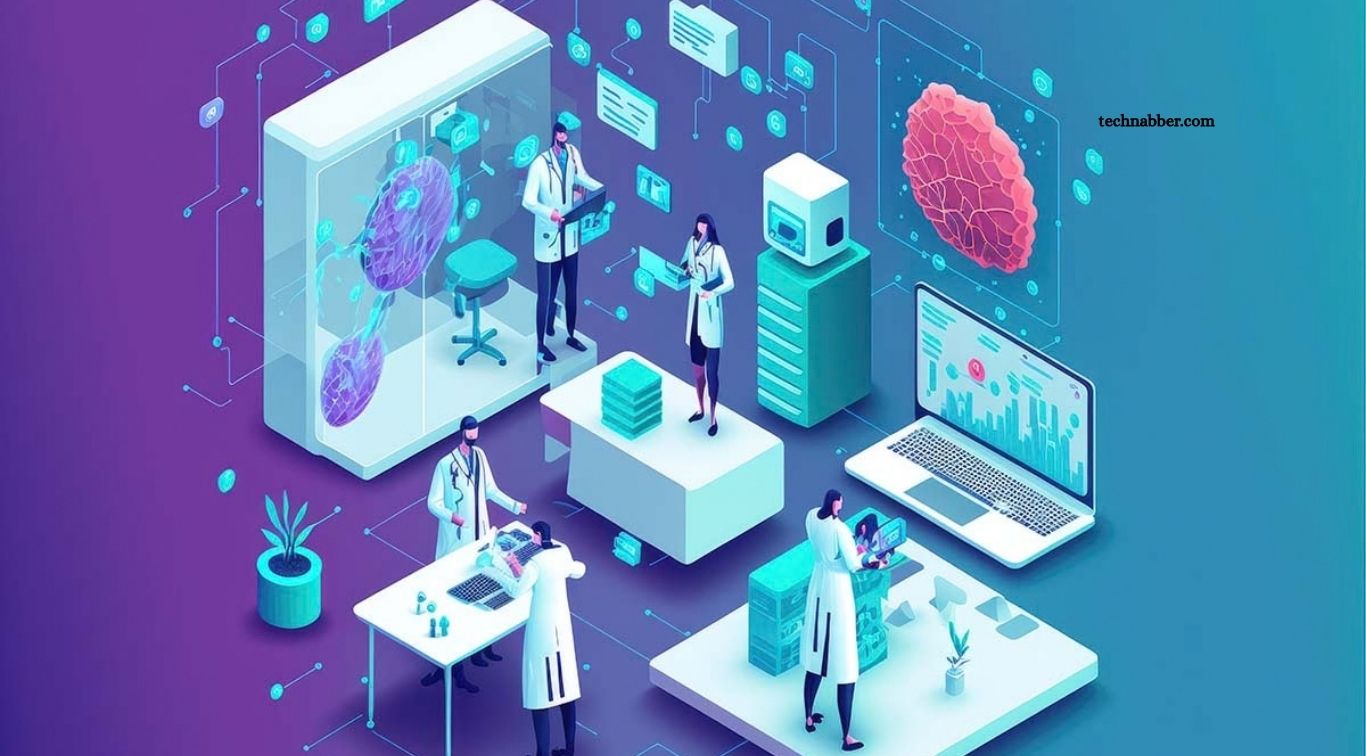
Artificial intelligence is rapidly changing how essential services operate, especially in healthcare and education. AI-powered systems can analyze large amounts of information, identify useful patterns, automate repetitive tasks, and provide personalized support. Hospitals use AI to assist doctors, manage patient information, and improve medical workflows, while educational institutions use intelligent technologies to create more flexible and personalized learning experiences.
The growing use of AI does not mean doctors, teachers, or other professionals will disappear. Instead, artificial intelligence can support human decision-making and reduce time spent on routine work. From medical diagnosis and patient monitoring to personalized lessons and automated assessments, AI is creating new opportunities for improving efficiency, accessibility, and overall service quality.
Read More: Best AI Writing Assistants Reviewed
What Is Artificial Intelligence?
Artificial intelligence refers to computer systems designed to perform tasks that normally require human intelligence. These tasks can include recognizing images, understanding language, analyzing information, predicting outcomes, and learning from previous data. Machine learning, natural language processing, computer vision, and generative AI are common technologies within the broader AI field.
Modern AI systems can process enormous datasets much faster than humans. However, AI systems depend heavily on data quality, system design, human supervision, and responsible use. Healthcare professionals and educators therefore need to combine AI capabilities with professional expertise rather than relying entirely on automated technology.
How AI Is Transforming Healthcare
Artificial intelligence is helping healthcare organizations process medical information faster and support clinical decision-making. AI systems can examine medical images, laboratory data, electronic health records, and patient histories to identify patterns that might require further investigation. These capabilities can help healthcare professionals manage increasingly complex information.
AI is also improving healthcare operations behind the scenes. Hospitals can use intelligent software for appointment scheduling, patient documentation, resource management, billing support, and administrative tasks. By automating repetitive processes, healthcare workers may have more time available for patient care and communication.
AI-Powered Medical Diagnosis
Medical diagnosis is one of the most important areas where artificial intelligence is being explored. AI-powered imaging systems can analyze X-rays, CT scans, MRIs, retinal images, and other medical images to highlight possible abnormalities. These systems can provide additional information that doctors can consider during diagnosis.
AI should generally function as a clinical support tool rather than an independent replacement for medical professionals. Patient symptoms, medical history, laboratory findings, and personal circumstances still require professional interpretation. Combining technological analysis with human expertise can create a more complete approach to medical decision-making.
Personalized Healthcare and Treatment
Every patient has different health conditions, medical histories, genetic factors, lifestyles, and treatment requirements. Artificial intelligence can analyze patient information to help healthcare professionals understand these differences and explore more personalized treatment strategies.
Personalized healthcare may also involve monitoring how patients respond to medications or treatments. AI-powered systems can help identify changes in patient data and provide healthcare teams with useful information. This approach could support earlier intervention and more informed treatment adjustments when properly implemented.
AI in Drug Discovery and Medical Research
Developing new medicines traditionally requires extensive research, testing, and financial investment. Artificial intelligence can help researchers analyze chemical structures, biological information, scientific studies, and experimental results more efficiently. AI models may help identify promising compounds for further research.
Researchers can also use machine learning to discover patterns hidden within large medical datasets. These insights can support research into diseases, treatment responses, genetic relationships, and possible therapeutic targets. Human researchers remain essential for verifying results, conducting clinical studies, and determining whether discoveries are safe and effective.
Virtual Assistants and Remote Patient Monitoring
AI-powered virtual assistants can help patients manage appointments, receive medication reminders, access general health information, and communicate with healthcare services. Automated support systems can provide basic assistance at any time, potentially reducing pressure on administrative teams.
Remote monitoring technologies can collect information such as heart rate, activity levels, sleep patterns, or other health measurements through connected devices. AI can analyze this information and identify changes that may require attention. Such systems can be particularly useful for patients who require regular monitoring outside hospitals.
How AI Is Transforming Education
Education is another major sector experiencing significant AI-driven change. Traditional classrooms often provide similar materials and teaching methods to many students, even though learners have different abilities, interests, and learning speeds. Artificial intelligence can help create more adaptive educational experiences.
Teachers can also use AI-powered tools for lesson planning, administrative work, learning material development, assessment support, and student progress analysis. Reducing repetitive tasks can allow educators to spend additional time teaching, mentoring students, and improving classroom engagement.
Personalized Learning Through AI
Personalized learning systems can adjust educational content according to individual student performance. When students struggle with a topic, an AI-powered platform may provide additional explanations, practice exercises, or easier examples. Students who understand concepts quickly may receive more advanced material.
This approach allows learners to progress at a pace better suited to their abilities. Personalized learning can also help teachers identify students who need additional support. However, educators remain important for motivation, creativity, emotional development, classroom interaction, and understanding circumstances that automated systems may not recognize.
AI Tutors and Intelligent Learning Assistants
AI tutoring systems can provide students with explanations, practice questions, writing assistance, language support, and feedback. Unlike traditional classroom schedules, digital learning assistants can often be accessed whenever students need additional help.
These tools can support independent learning, but students still need to evaluate AI-generated information carefully. AI can occasionally provide inaccurate, incomplete, or misleading answers. Teachers can help students develop responsible AI literacy, critical thinking skills, and effective methods for checking information.
Automated Assessment and Student Feedback
Teachers spend considerable time reviewing assignments, preparing assessments, and providing feedback. Artificial intelligence can assist with certain assessment tasks, especially structured quizzes, practice exercises, and basic performance analysis.
Automated feedback can help students quickly understand where improvement is needed. However, complex work such as essays, creative projects, presentations, and subjective assignments often requires deeper human judgment. Educators should therefore use automated assessment carefully and maintain appropriate oversight.
Improving Accessibility in Education
AI technologies can make learning materials more accessible for students with different needs. Speech recognition can convert spoken language into text, text-to-speech tools can read digital content aloud, and translation systems can support students learning in different languages.
AI can also help simplify difficult material, generate alternative explanations, and provide flexible learning formats. These capabilities may improve educational access, especially when combined with thoughtful instructional design and reliable digital infrastructure.
Benefits of AI in Healthcare and Education
AI provides several potential benefits across both sectors. It can process large amounts of information quickly, automate routine tasks, support personalized services, and help professionals identify useful patterns within complex data.
Major advantages include:
- Faster information processing
- Personalized healthcare and learning experiences
- Reduced administrative workload
- Improved access to digital services
- Better data analysis
- Continuous learning and monitoring support
- More efficient resource management
- Greater accessibility for diverse users
The value of AI depends on how responsibly these technologies are designed and implemented. Strong human oversight, high-quality information, secure systems, and clear accountability remain essential.
AI works best when technology complements professional expertise. Doctors understand patient circumstances, while teachers understand individual learners and classroom environments. Combining these strengths with AI-powered analysis can provide more effective results than relying exclusively on either technology or humans.
Challenges and Ethical Concerns of AI
Despite its potential, artificial intelligence introduces serious challenges. AI systems frequently depend on large datasets containing sensitive medical, educational, or personal information. Organizations must protect this information from unauthorized access and misuse.
Bias is another concern. AI systems trained using incomplete or unbalanced datasets may produce unfair or inaccurate results for particular groups. Transparency, regular testing, professional oversight, data protection, and responsible AI policies are therefore essential in healthcare and education.
Will AI Replace Doctors and Teachers?
Artificial intelligence is more likely to change professional roles than completely replace doctors or teachers. Healthcare requires empathy, ethical judgment, patient communication, physical examination, and clinical expertise that cannot simply be automated.
Teaching also involves emotional intelligence, motivation, leadership, creativity, social interaction, and understanding individual student needs. AI can support professionals by handling information and repetitive tasks, while humans continue providing judgment, relationships, and responsibility.
The Future of AI in Healthcare and Education
Future healthcare systems may use AI more extensively for medical imaging, patient monitoring, clinical research, administrative automation, and personalized healthcare. Advances in machine learning and digital health could make medical services more efficient and data-driven.
Education may become increasingly personalized through intelligent tutoring systems, adaptive learning platforms, automated support tools, and interactive digital classrooms. The strongest future systems will likely combine technological efficiency with human expertise, ethical standards, transparency, and responsible supervision.
Frequently Asked Questions
How is AI used in healthcare?
AI is used for medical image analysis, clinical decision support, patient monitoring, administrative automation, research, and healthcare data analysis.
How is AI used in education?
AI supports personalized learning, intelligent tutoring, automated assessments, lesson planning, accessibility tools, and student performance analysis.
Can AI improve medical diagnosis?
AI can help healthcare professionals analyze medical information and identify patterns, but qualified professionals should interpret results.
Can artificial intelligence replace teachers?
AI can assist teachers with educational and administrative tasks, but human teaching, mentoring, creativity, and emotional understanding remain important.
What is personalized learning with AI?
Personalized learning uses AI to adjust lessons, exercises, feedback, and difficulty levels according to individual student performance.
Is AI safe for healthcare?
AI can support healthcare when properly tested, monitored, secured, and used under appropriate professional and regulatory oversight.
Conclusion
Artificial intelligence is revolutionizing healthcare and education by making information easier to analyze, improving personalization, automating routine processes, and supporting professionals with increasingly sophisticated digital tools. From medical imaging and patient monitoring to adaptive learning and AI tutoring, intelligent technologies are creating new possibilities across both sectors. Successful AI adoption requires more than advanced technology.

1 Comment
Pingback: Powerful AI Tools for Digital Marketing - TechNabber