

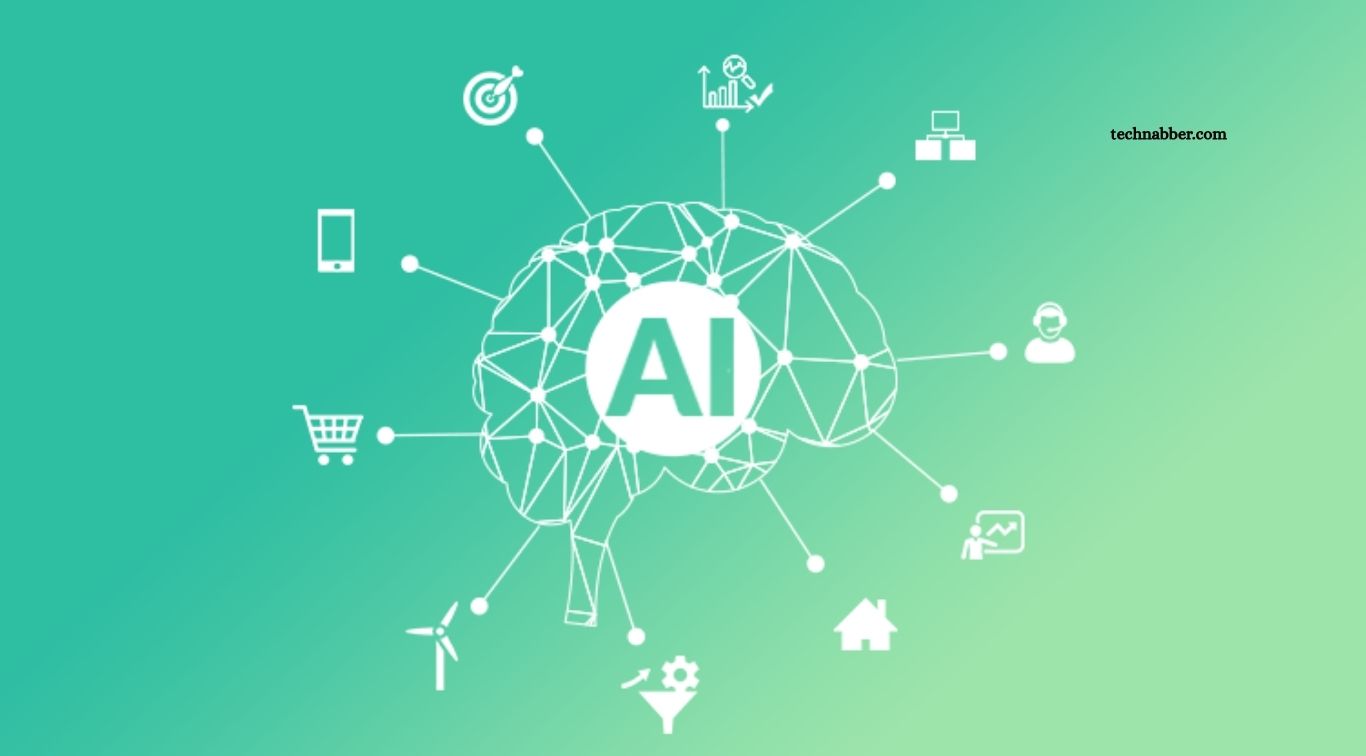
Artificial intelligence is changing how people work, communicate, create, and solve problems. From generative AI and autonomous systems to AI-powered healthcare and cybersecurity, new technologies are expanding the role of intelligent machines across industries. Businesses are adopting AI to improve efficiency,
Individuals are using AI tools for learning, creativity, research, and everyday tasks. Understanding the latest artificial intelligence trends can help businesses, professionals, and students prepare for a future where AI becomes an increasingly important part of digital life.
Read More: AI Image Generation Tools Worth Trying
Generative AI and Smarter Content Creation
Generative AI remains one of the most important artificial intelligence trends shaping the future. Modern AI systems can create text, images, videos, audio, presentations, software code, and other digital content from simple instructions. These capabilities are helping marketers, designers, writers, developers, educators, and creators complete tasks faster while exploring new creative possibilities.
The technology is also becoming more useful for business operations. Companies can use generative AI to draft documents, summarize information, create marketing materials, analyze customer feedback, and support internal communication. Future AI models are expected to become more accurate, context-aware, and capable of producing highly personalized content.
AI Agents and Autonomous Workflows
AI agents are emerging as another major trend. Unlike basic chatbots that respond to individual questions, AI agents can perform multiple steps to complete a broader objective. They can analyze information, use digital tools, make decisions within defined limits, and complete repetitive workflows with less human intervention.
Businesses are exploring AI agents for customer support, research, software development, sales operations, scheduling, data analysis, and administrative tasks. As agent technology improves, organizations may use teams of specialized AI agents that work together while humans provide direction, oversight, and final approval.
Multimodal Artificial Intelligence
AI is moving beyond text-based interaction toward multimodal systems that can understand and process different types of information. These systems can work with combinations of text, images, audio, video, and other data formats.
Multimodal AI can make digital assistants more useful because users can communicate naturally through different forms of media. For example, someone could upload an image, ask a spoken question, and receive a detailed text response. This trend could improve education, accessibility, customer service, healthcare support, and professional software.
AI in Healthcare
Artificial intelligence is creating new possibilities across healthcare. AI systems can help analyze medical images, identify patterns in large datasets, support research, and assist healthcare professionals with administrative work.
AI is also becoming important in drug discovery and medical research. Researchers can use machine learning to analyze biological information and identify potential candidates for further investigation. Human expertise remains essential, particularly for diagnosis, treatment decisions, patient safety, and ethical oversight, but AI can provide valuable analytical support.
AI-Powered Cybersecurity
As digital threats become more sophisticated, artificial intelligence is becoming an important cybersecurity technology. AI can analyze large amounts of network activity, identify unusual behavior, detect potential threats, and help security teams respond more quickly.
At the same time, attackers can also use AI to automate certain malicious activities. This creates an ongoing technology race between defenders and attackers. Future cybersecurity strategies will increasingly combine AI-based detection with strong security practices, human expertise, identity protection, and continuous monitoring.
AI and Robotics
The combination of artificial intelligence and robotics is creating smarter machines capable of operating in physical environments. Robots can use AI to understand surroundings, recognize objects, plan movements, and respond to changing conditions.
AI-powered robotics has applications in manufacturing, logistics, agriculture, healthcare, warehouses, and other industries. As hardware becomes more capable and AI models improve, robots may perform a wider range of tasks that require perception, planning, and adaptation rather than simple repetition.
Personalized AI Experiences
Personalization is becoming an important direction for AI development. Instead of providing identical responses to every user, future AI systems can increasingly adapt to individual preferences, goals, working styles, and context.
Personalized AI could support customized learning, productivity recommendations, shopping experiences, entertainment, and professional workflows. Responsible personalization will require careful handling of user data, transparency, privacy controls, and clear boundaries around how information is stored and used.
AI in Education
Artificial intelligence is changing the way students and teachers approach learning. AI tools can explain complex concepts, generate practice questions, provide writing feedback, summarize educational material, and support personalized learning experiences.
Teachers can also use AI to assist with lesson planning, educational content creation, and routine administrative tasks. The future of AI in education will depend on using these tools as learning support rather than replacing critical thinking. Students still need to develop research, reasoning, creativity, communication, and problem-solving skills.
Edge AI and On-Device Intelligence
Many AI applications currently depend on cloud computing, but edge AI is expanding the ability to process information directly on devices. Smartphones, computers, cameras, vehicles, and other connected devices can perform certain AI tasks locally.
On-device AI can reduce latency and improve privacy because some information does not need to travel to remote servers. It can also allow intelligent features to work with limited or inconsistent internet connectivity. Improvements in specialized AI chips are expected to support wider adoption of this technology.
AI and Business Automation
AI-powered automation is transforming repetitive business processes. Organizations can use AI to handle data entry, document processing, customer inquiries, reporting, scheduling, and other routine activities.
The growing use of AI automation does not simply mean removing human involvement. Many organizations are redesigning workflows so employees can spend more time on strategy, creativity, communication, and complex decision-making. Businesses that combine automation with appropriate human oversight can build more efficient operating models.
Responsible and Explainable AI
As AI becomes more influential, responsible development is becoming increasingly important. Organizations need to consider issues such as privacy, bias, security, transparency, intellectual property, and accountability when deploying AI systems.
Explainable AI is also gaining attention because users and organizations may need to understand why an AI system produced a particular result. Clear documentation, testing, monitoring, human oversight, and appropriate governance can help organizations use AI more responsibly.
AI Regulation and Governance
Governments and organizations around the world are developing rules and frameworks for artificial intelligence. AI governance focuses on areas such as safety, transparency, privacy, accountability, risk management, and responsible deployment.
Regulation will continue to evolve as AI capabilities develop. Businesses adopting AI should monitor relevant requirements and establish internal policies for acceptable AI use. Strong governance can help organizations manage risks while still taking advantage of useful AI applications.
The Future of Human-AI Collaboration
The future of artificial intelligence is not only about smarter machines. It is also about improving collaboration between humans and AI. AI can process information quickly, identify patterns, automate repetitive work, and generate ideas, while humans provide judgment, creativity, empathy, context, and accountability.
Professionals who learn how to work effectively with AI tools can adapt to changing workplace requirements. AI literacy will become increasingly valuable across industries, making the ability to evaluate AI outputs and use AI responsibly an important professional skill.
Frequently Asked Questions
What is the biggest AI trend shaping the future?
Generative AI is one of the most significant trends, with applications across content creation, business, software, and education.
How will AI affect businesses?
AI can automate repetitive work, improve data analysis, support customers, and help businesses make faster decisions.
What are AI agents?
AI agents are systems designed to perform multi-step tasks and workflows with limited human intervention.
How is AI changing healthcare?
AI can support medical research, image analysis, data processing, and administrative tasks.
Will AI replace human workers?
AI is more likely to change many job responsibilities, with some tasks becoming automated while new skills and roles develop.
Why is responsible AI important?
Responsible AI helps address privacy, security, bias, transparency, safety, and accountability concerns.
Conclusion
Artificial intelligence trends are shaping the future of technology, business, education, healthcare, cybersecurity, and everyday life. Generative AI, AI agents, multimodal systems, robotics, edge computing, automation, and responsible AI are creating new opportunities while introducing important challenges. The future will likely involve closer collaboration between humans and intelligent systems. Businesses and individuals that understand emerging AI technologies, develop practical AI skills, and prioritize responsible use can better adapt to an increasingly AI-driven digital world.

1 Comment
Pingback: AI Automation Tools for Businesses and Freelancers - TechNabber